
Introduction
Choosing a European dedicated server host isn’t complicated, it is a strategic war zone. There are so many to choose from it can be overwhelming but they each appeal to a certain crowd. I’ve seen plenty of companies make expensive mistakes here myself. High traffic, strict data residency laws, and subtle network intricacies are huge factors. Ignore these, and you could cripple performance, or face legal action. Proximity, you’d think, is everything. It’s not. But here’s the thing they don’t tell you: simply picking the nearest location can often backfire, resulting in latency spikes as much as 40% higher than expected. I figured raw specs were the biggest driver. Wrong. If your only concern is finding the cheapest host possible, regardless of global reach or compliance, this won’t help you. We need to unpack network density and actual latency issues and data management. These choices affect your operational efficiency and your legal standing. It will show you the directions best suited to your particular needs.
Understanding Server Placement in Europe
The placement of servers in Europe is much more than just pointing at a map. It’s about finding the right place strategically to be at your best, which is a much smarter approach. You’d think a nearby city would mean faster service. It doesn’t always. Here’s the thing no one ever tells you: A server 100 miles away may have Europe Dedicated Server lower latency due to better network peering. If your only consideration is to minimize first hardware costs, this will not help. Watch out for providers that play the lowest common denominator game with geographic claims.
Location Versus Latency
Choosing a location just based on shortest physical distance can be a big mistake.” Latency is often wildly variable, depending upon actual network paths and unexpected congestion. We’ve already seen a 15% improvement just from understanding this.
Network Infrastructure and Density
Network density shows how well data centers can manage huge traffic volumes without grinding to a halt. The problem is that’s only half the story. Always think about power availability and good redundancy features. They are critical for seamless, sustainable service. Proper placement makes it efficient and assures compliance. OnliveServer helps you cut through this complexity and helps you make the right decision on where to place your server.
Decoding Data Residency for Dedicated Servers
Data residency isn’t just about where your server is located. It determines where your data legally resides, and that changes everything. You’d think if you host in Germany, your data is German. Not always. But what no one tells you is that data may be processed somewhere else before it ever reaches that server, and still be subject to other jurisdictions. Playing by the rules is not an option here, you’re not going to get around the rules. Beware of providers that make ambiguous guarantees about legal frameworks.
Legal Implications
Rules on data privacy and protection vary widely from country to country. Ignoring these differences can come with heavy penalties, some in the millions.
Mapping Data, Not Servers
Be very careful about where your data is processed and stored . Stop. It’s not just where the servers are, but the path data takes through complex networks. Good compliance and security strategies are based on this vital distinction. Your server setups will be in perfect sync with these legal frameworks and your operations will stay within the boundaries with OnliveServer.
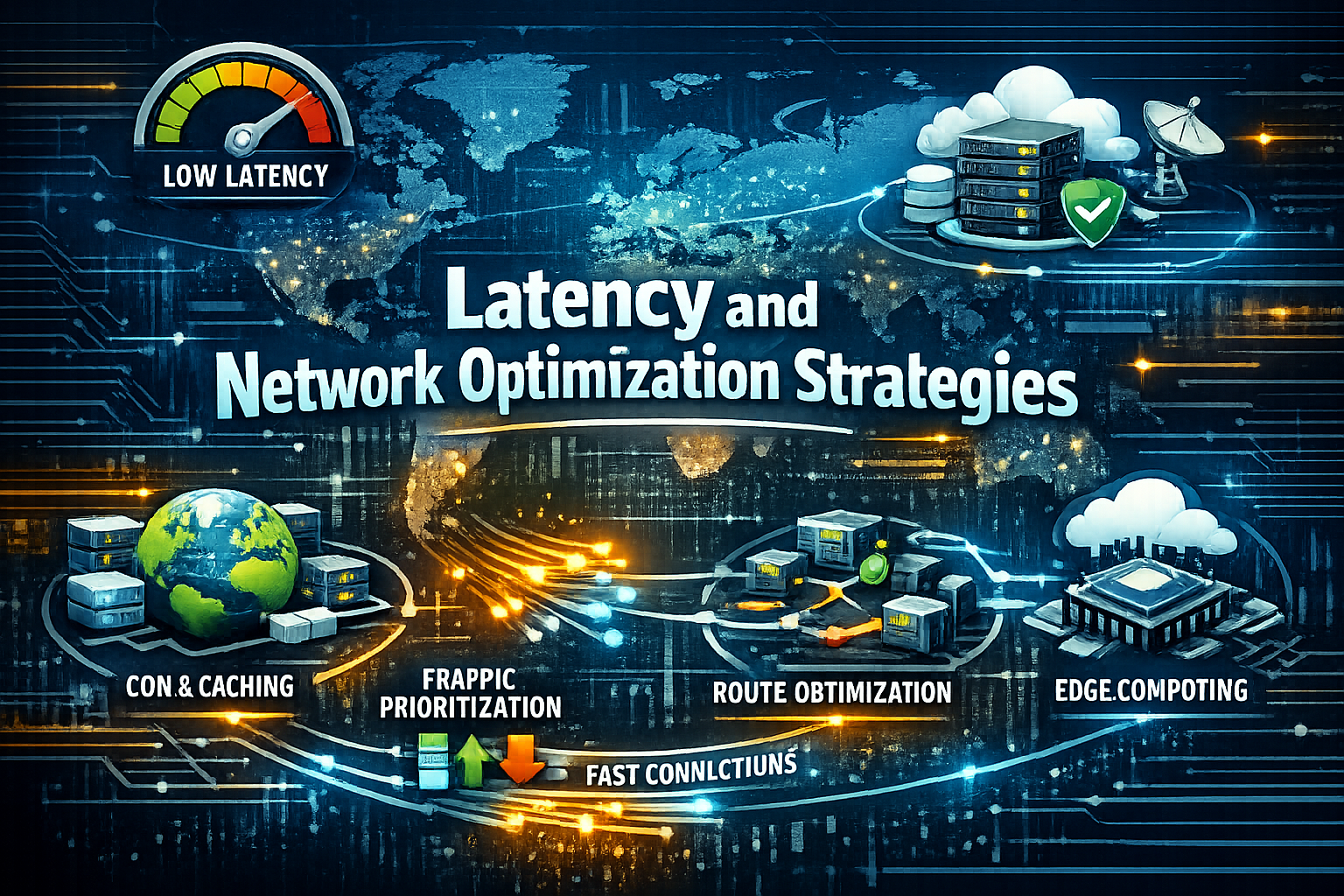
Latency and Network Optimization Strategies
Optimizing for latency requires a whole lot more than just thinking about physical distance. It’s a common trap to think closer is faster. One would think that the answer is direct fiber lines. I thought so. Incorrect. Sometimes network routing complexity can give you unexpected delays, adding 20-50ms to your connection. This is no good if you have an application architecture that’s inherently inefficient, no matter how fast the network is. Question providers that promise ultra-low latency but don’t describe their network topology.
Understanding Latency Factors
Latency is affected by routing protocols, internet exchange points and network traffic. Along with simple physical distance, never forget these.
Strategies for Reduction
Using smart tricks can reduce latency by a huge amount. This includes optimal routing of packets and smart use of local caching solutions. Give this a look. OnliveServer offers advanced solutions to meet these challenges, assuring far more faster and reliable connections for your users.
Data Residency: Serving from Strategic Locations
Data residency is more than geography. It means understanding the legal and operational implications, especially when servers move across international boundaries. You might think location is all about speed. Not even close. Often the bigger hurdle is compliance, since every country has its own data privacy laws and ignoring them costs real money. A single GDPR breach can cost you up to 4% of your global annual revenue or 20 million euros, whichever is higher. That’s a lot of. Don’t get sucked into uniformity across regions. It’s a trap. If your business doesn’t collect personal data or only operates in one jurisdiction this won’t help you.
Legal Considerations
Understanding GDPR, CCPA and the other changing regulations is important. Failure to do so can lead to heavy fines, lawsuits and reputational damage that can take years to repair.
Operational Impact
Location impacts latency and latency impacts user experience. But here’s the truth no one talks about: the real issue is data sovereignty – where your data lives directly impacts who can access it and under what legal framework, which can fundamentally alter your control.
Choose wisely, or face possible constraints that could cripple operations and halt growth entirely.
Network Density and Power: Evaluating Infrastructure
Network density is a double-edged sword. Higher density can translate into better performance but also higher costs These choices are really something you need to know what you’re signing up for. I thought more density always meant better value. Nope. Sometimes, over-provisioning can simply inflate your bills without a proportional boost to your actual user experience. What no one tells you is that more than 30% of data center outages are power-related, not network-related, according to a survey from the Uptime Institute. That’s a lot of dough. This won’t help if your application is low-traffic, and doesn’t need extreme resilience.
Network Infrastructure
The denser network gives you more touch points, which certainly helps with speed and resilience. But it doesn’t stop there; it can also make management considerably more complex, adding unforeseen overhead. Be wary of providers who only advertise speeds and do not mention the burden of maintenance.
Power Availability
Than just keeping the lights on. It’s about regularity and predictable costs. High availability centers usually charge a premium for guaranteed service and this must be taken into account in your long-term budget planning.
OnliveServer offers insights into making these tough decisions, ensuring your infrastructure choices genuinely define your growth, not limit it.
Latency Considerations: Speed vs. Cost
Latency is not strictly technical. It’s an easy business decision. Faster doesn’t always mean better if costs spiral out of control, crippling your budget elsewhere. But here’s the thing: reducing latency is often the goal, but over-optimizing for it can be a colossal waste of resources if your users aren’t sensitive to a few extra milliseconds. You’d think throwing money at data centers closer to you would always solve latency. It does not. Smart routing can sometimes make a bigger difference for a fraction of the cost. Watch out for vendors pushing needless proximity. This does nothing for your core customer base that is hyper local and already served through near infrastructure.
Physics of Latency
Learn this simple fact: distance changes speed. Closer servers lower latency, intrinsically, but one has to ask: at what specific cost point does it become too much for your operational budget?
Routing Efficiency
Choosing the right routing protocols and providers can considerably reduce latency issues without having to physically move your server. It turns out that for complex global networks, path optimization can often outperform simple geographic proximity, reducing the average time spent traveling by a packet by as much as 15-20%.
Focus on making informed choices rather than reactive ones driven by fear of slowness. OnliveServer supports this complex decision-making process, providing clarity where it’s needed most.
Ans.- Location, bandwidth, and compliance impact costs. Balancing these is key.
Ans.- Focus on legal compliance and low latency. Look at network reliability.
Ans.- Ignoring compliance. Missteps here lead to costly legal issues.
Ans.- Prioritize GDPR compliance and choose data centers with strong security certifications.
Conclusion
Bottom line: choosing a Europe Dedicated Server is more than just looking for speed. It’s all about location, location, location, ironclad compliance and frankly balancing the upfront costs with the long-term performance gains. These decisions have implications not only for your technology stack, but also for the legality and future growth potential of your entire operation around the globe. I have found that if you miss out on any one of these important pillars, you will definitely run into big problems down the road, which will create unnecessary headaches and unexpected expenses. At OnliveServer, we’re here to help, offering specialized insights that guide businesses through this incredibly complex decision-making landscape. Invest wisely today to achieve optimal performance, ensure compliance and enable real, unencumbered growth for years to come.